The strange story of inventing the ‘bastard’ in medieval Europe | Aeon Ideas
Before the end of the 12th century, a person with noble but non-married parentage could inherit. What changed?
Sam's Personal Website
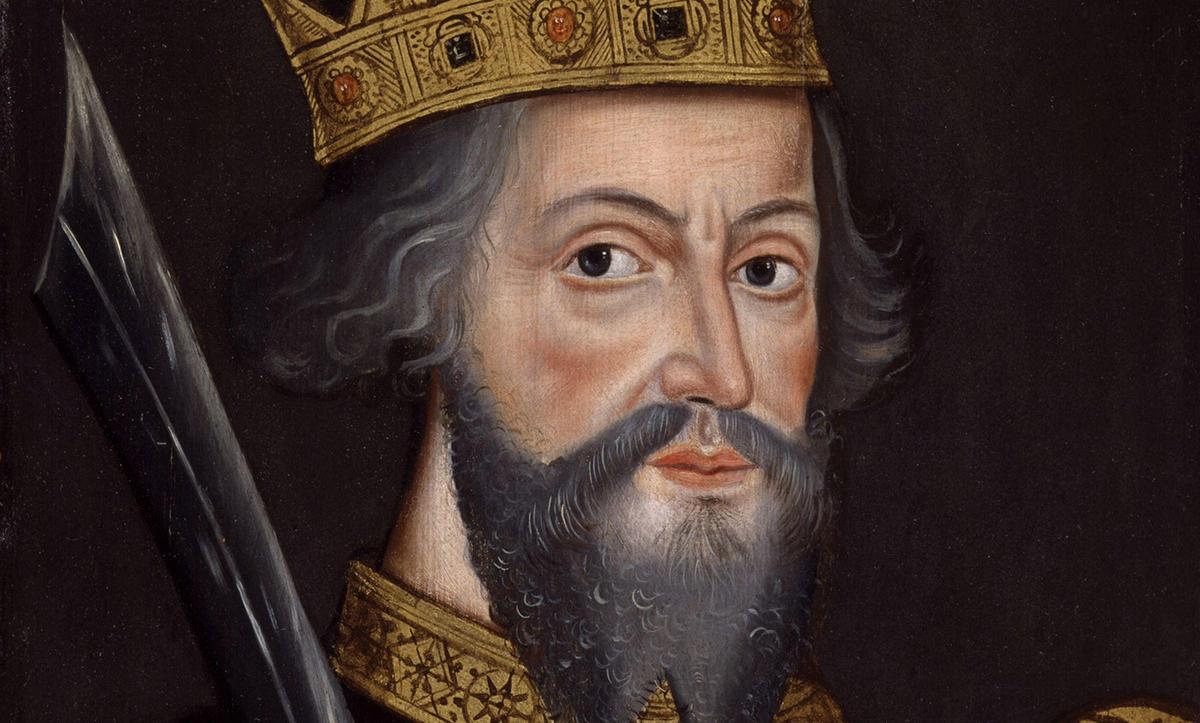
In the Early Middle Ages, the word "bastard" didn't necessarily mean "illegitimate child." William the Conqueror — the Norman king who conquered England in 1066 — is also known as "William the Bastard," and, while his parents were not married, the epithet "bastard" likely referred rather to the fact that his mother was not of noble birth. Of course, this didn't ultimately matter, since he became a very successful and influential king.
But "bastardy" would eventually became a very important concept in Western law. That's not because anyone saw anything particularly reprehensible about love children. In prosperous years of the High Middle Ages, as incredible wealth abounded, the church codified moral law, states followed suit, and eventually ordinary people started operating as legal agents. This was largely caused by the booming value of land and emerging market for labor, which created new bureaucratic–commercial frameworks for daily life. Suddenly, lots of ordinary people were very concerned with abstract legal questions such as, "According to bible law, can my niece inherit my brother's estate if his marriage was illegal?"
Society then did not operate subject to rigid Christian canon law rules. Instead, it measured the value of its leaders based on their claims to celebrated ancestry, and the power attached to that kind of legitimacy. To be sure, marrying legitimately certainly received a good deal of lip service throughout the Middle Ages. Nevertheless, in this pre-13th-century world, the most intense attention was paid not to the formation of legitimate marriages, but to the lineage and respectability of mothers. Only beginning in the second half of the 12th century did birth outside of lawful marriage begin to render a child illegitimate, a ‘bastard’, and as such potentially ineligible to inherit noble or royal title.
This ties into the larger theme that is the evolution of family roles through the Middle Ages. At the beginning of the Middle Ages, England (and much of Europe) was pagan and governed through multifarious tribes and chiefdoms. These pre-Christians had strong kinship ties, with trusted elders in positions of authority. The church — which was advancing a colonial project across Europe — saw this as an obstacle to its expansion and authority, and so worked to dissolve traditional family ties and institute the nuclear (or "neolocal") family unit. The church invented proscriptions on consanguineous marriage (marrying your cousins, or even distant cousins), which we still uphold today in the West (though not in other cultures). Over the course of many centuries, the traditional understanding of family was eroded and replaced with a new Christian idea of family. One of the most important changes in the transition to the modern society was certainly the evolution of the family from an expansive political organization with porous boundaries to a small legal unit based solely on blood and contracts.
Consider the fact that Indigenous North Americans were shocked to learn about poverty and homelessness when they visited France in the 1700s. To them, it was shameful to let someone starve while you have food. If we understand family as a broad concept, then we are more likely to work together to ensure everyone has food. But when we divide our families into small economic units, we create more cracks for people to fall through. Perhaps it's no coincidence that Scandinavian countries tend to place less import on family values and also have stronger social welfare programs — they believe that love is based on freedom. Centuries after the church restricted the scope of family in Europe, the Canadian government defined who qualifies as a Status Indian based on modern European ideas of lineage, separating countless Indigenous women and children from their families. Just last week, Indigenous staff at my alma mater raised concerns about a new verification process that would reassert the same prescriptive ideas of family to determine an Indigenous employee's qualifications — a reminder that laws written by the church more than a millennium ago during a colonial project in Europe continue to enforce the ongoing colonial project in North America.
In The Dawn of Everything, David Graeber and David Wengrow propose that one of the fundamental freedoms is the freedom to create political groups. This includes a political unit like a party, but it's also much more profound than that. A workplace is a political unit. A family is a political unit. It is a group of people who operate cooperatively. The ability to create new collectives is incredibly powerful, and it seems like it has been much more common at other times and places in human history. Maybe, the imposition of a rigid family structure has also been the expropriation of our freedom to imagine the world we want to inhabit.